

This educational material is for informational purposes only and is not personalized financial or tax advice.
You're ready to retire at 65, but you've heard that waiting until 70 to claim Social Security could mean a larger monthly check. Do you wait? If so, where will your income come from until then?
Before deciding when to claim Social Security, it helps to take a closer look at your retirement income needs and how you'll cover them.
1. Start With the Income You’ll Need
Retirement planning isn’t just about how much you’ve saved. It’s also about how much income you’ll need to support your lifestyle once your regular paycheck stops.
Start by estimating your monthly retirement expenses, including housing, groceries, transportation, healthcare, and activities you enjoy.
Then consider which expenses are essential and which are more flexible.
For example, you may want reliable monthly income to cover everyday necessities while using other savings for travel, hobbies, or unexpected expenses.
Having a clearer picture of your income needs can help you determine how much you’ll rely on Social Security and other retirement savings.
2. Understand How Timing Affects Your Benefits
The age at which you begin collecting Social Security can make a meaningful difference in your monthly income.
You generally have three options:
Age 62: You can begin receiving benefits early, but your monthly payments will be permanently reduced.
Full retirement age: Depending on your birth year, your full retirement age is between 66 and 67 for people approaching retirement today. At this age, you’re eligible to receive your full retirement benefit.
Age 70: Delaying benefits beyond your full retirement age increases your monthly payment until age 70.
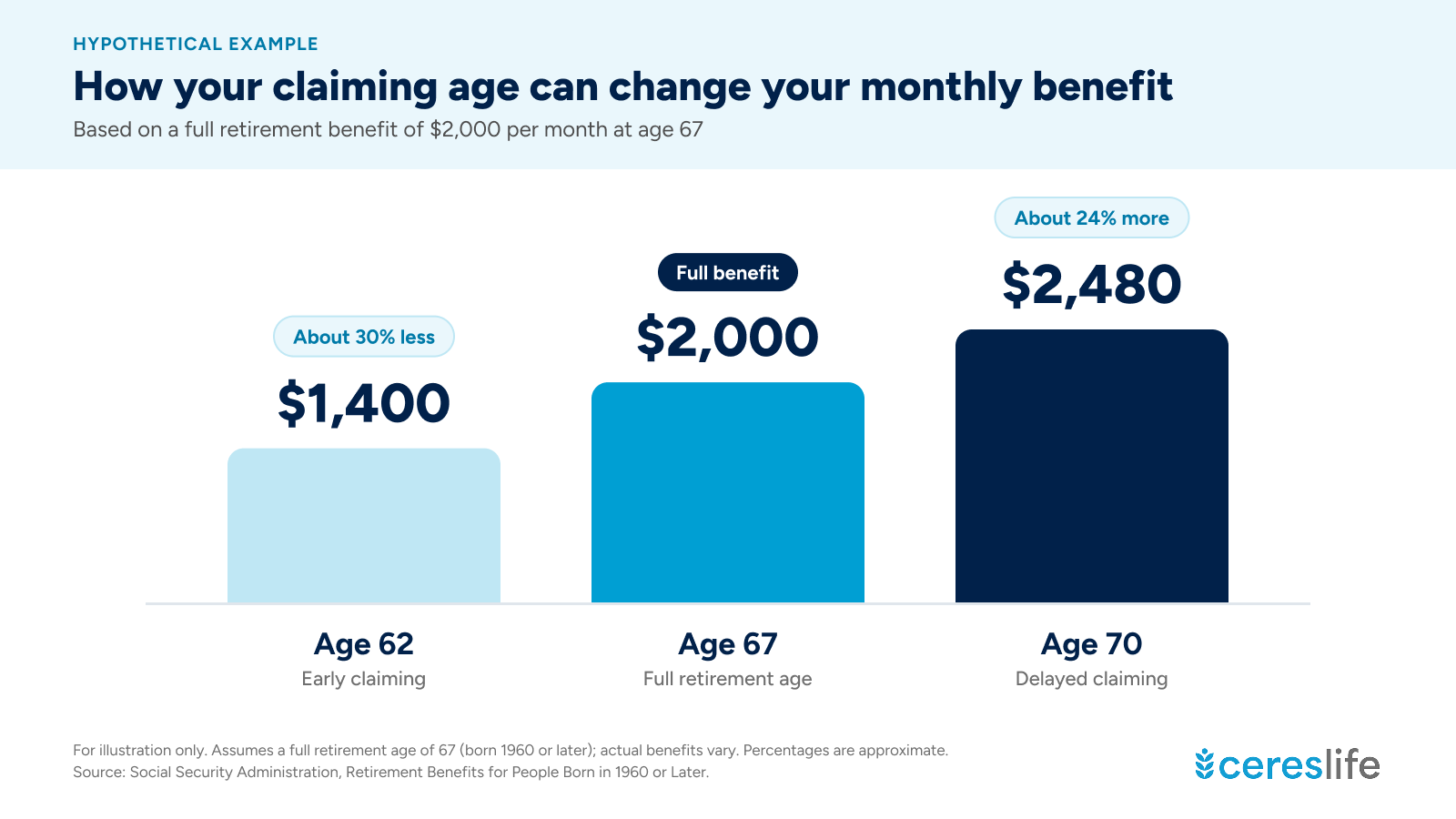
According to the Social Security Administration, for someone whose full retirement age is 67, claiming at 62 results in a benefit about 30% lower than their full retirement benefit. Waiting until age 70 increases that benefit by approximately 24%¹.
Here’s a hypothetical example of how claiming age could affect a monthly benefit if the full retirement benefit would be $2,000 if claiming at age 67:
While waiting may provide a larger monthly payment, it doesn’t necessarily mean you’ll receive more in total benefits over your lifetime.
Claiming earlier means receiving smaller payments over a potentially longer period, while waiting means receiving larger payments for fewer years. How long you live, your financial needs, and other personal circumstances can all influence which approach makes sense². The Consumer Financial Protection Bureau’s guide to planning your Social Security claiming age can help you think through the decision.
There’s no single right age for everyone. And if you do decide to wait, there’s another important question to consider: How will you cover your expenses in the meantime?
3. Consider What Will Fill the Gap
What happens if you retire at 65 but decide to wait until 70 to collect Social Security? That’s five years when you’ll need another source of income. For some retirees, savings from a 401(k), IRA, pension, or other investments may help bridge that gap. Others may choose to work part-time or use a combination of income sources. The key is understanding how these decisions affect your overall retirement savings.
For example, withdrawing more from your investments while delaying Social Security could reduce the amount you have available later in retirement. However, waiting may also provide a larger monthly Social Security benefit for the rest of your life, helping protect against the risk of outliving your savings. The important question isn’t simply whether you can afford to wait, but how that decision fits into your overall retirement income plan.
4. Think Beyond Social Security
Social Security can provide a valuable foundation for retirement income, but it may not cover all your expenses.
That’s why many retirement plans include a combination of income sources, such as:
Social Security: Monthly benefits that generally continue for life and receive cost-of-living adjustments.
Pensions: Employer-sponsored benefits that may provide regular retirement income.
Personal savings and investments: Assets that can help cover additional expenses and provide financial flexibility.
Annuities: Insurance products that can offer different benefits, including guaranteed growth or income, depending on the type of annuity.
Each source serves a different purpose.
For example, certain annuities can provide guaranteed lifetime income to help supplement Social Security. Others, such as multi-year guaranteed annuities (MYGAs), offer a fixed interest rate for a specified period, helping you grow a portion of your retirement savings with greater predictability.
Understanding your options can help you create a retirement income strategy that balances stability, growth, and flexibility.
5. Make a Plan That Works for You
Your Social Security decision shouldn’t happen in isolation. Your retirement goals, savings, health, family circumstances, and other income sources all play a role in determining the right approach.
Before deciding when to claim, ask yourself:
How much monthly income will I need in retirement?
How much of that income will Social Security cover?
What other income sources will I have available?
Could I afford to delay Social Security benefits?
How might my decisions affect my spouse or family?
A financial professional can help you evaluate these questions and explore how different retirement income sources may work together.
A More Confident Retirement Starts with a Plan
Social Security is an important part of retirement, but it’s only one piece of the picture.
By understanding your income needs, exploring your options, and making thoughtful decisions about when to claim benefits, you can take meaningful steps toward a more secure financial future.
At Ceres Life, we believe retirement planning should be easier to understand. Explore our retirement resources to learn more about building a financial foundation for your next chapter.
References
1: Social Security Administration, Retirement Benefits for People Born in 1960 or Later
2: Consumer Financial Protection Bureau, Planning Your Social Security Claiming Age